
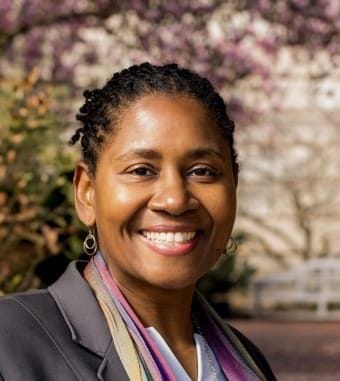
Tracy A. Corley, PhD
Founder and President, yuroboros SPC
Engaged Scholar-Practitioner in Urban and Environmental Affairs
Engaged scholar-practitioner Tracy A. Corley is frequently sought as an expert, speaker, and lecturer in urban and environmental affairs. Dr. Corley teaches and conducts research worldwide, advancing Transformative Science and participatory practices for places seeking to co-create governance, policies, and research through deeper community relationships. Her social purpose corporation, yuroboros SPC, supports social change-makers and engaged scholars in developing their competencies in ethical social transformation. Offerings include training courses, advisory services, and (Co)Action Lab, a membership-based community of practice.
Prior to launching yuroboros SPC, Dr. Corley taught courses in public policy and urban affairs and directed Arlington-based graduate programs for Northeastern University's College of Social Science and Humanities. At Conservation Law Foundation, she formalized its community-engaged research program, expanding participatory monitoring and research to communities across New England. As a consultant, she authored and published The Strategy String: An Organizational Primer for Tying Strategy to Performance and applies its framework in her advisory and consulting services. She is also lead author of multiple peer-reviewed publications, including "Do You See What I Smell? A Participatory Visual Arts Method for Documenting Residents’ Experiences with Odors in Providence, Rhode Island", and From Transactional to Transformative: The Case for Equity in Gateway City Transit-Oriented Development. Media production credits in her portfolio include a WGBH webinar series on equitable development, and she is an accomplished event keynote, moderator, and host.
Key Honors
- Receiving a German Academic Exchange Service (DAAD) 10-month research grant
- Serving as a scientific adviser for the Population Health Institute at the University of Wisconsin
- Receiving a Gateway City Champion Award
- Serving as a presidential appointee to the U.S. Environmental Protection Agency’s Board of Scientific Counselors
- Being recognized as a Grist Fixer
- Being recognized a Women in Buddhism BIJAH Fellow at the Garrison Institute
Education and Certifications
- Northeastern University — Boston, United States | PhD in Law and Public Policy. Degree awarded: 12/2018
- Northeastern University — Boston, United States | Master of Public Policy. Degree awarded: 08/2018
- University Duisburg-Essen — Duisburg, Germany | Visiting Doctoral Student, Social Sciences. 10/2016 to 08/2017
- Clemson University — Clemson, United States | BA in Architectural Design. Degree awarded: 06/1995
- Hertie School of Governance — Berlin, Germany | Executive Education Certificate in Politisch kommunizieren in Zeiten von Desinformation (Political Communications in the Age of Disinformation), 2022
- Effectiveness Institute — Bellevue, United States | Organizational Assessment and Management Certificate in People Skills, 2006
Contributions to Science
Dr. Corley has made transdisciplinary contributions to the Social and Earth Sciences. Some of the most recent are highlighted below.
Framework for Transformative Science as a Paradigm Shift
In the Social Sciences, Dr. Corley's research, teaching, and consulting have helped to convert nascent, disconnected concepts that underpin participatory scientific approaches into a legible framework for use in designing, implementing, and evaluating rigorous action research that engages the public. Her Transformative Science interests began in 2012 when her consulting team piloted ethnography and community participation in a study that informed energy efficiency specifications for the U.S. Department of Energy (Corley 2012), and an interim role piloting a federal block grant-funded community-engaged job training and placement program for men re-entering the workforce after incarceration.
In 2022, Dr. Corley began a systematic review of participatory studies to address the growing need for a coherent framework using complexity science to distinguish the philosophical differences between transformative and traditional (positivist, realist, and constructivist) social science paradigms. Publication of this research is pending.
In addition to multiple presentations and lectures (Corley 2023a; Corley 2024a; Corley 2024b), other manuscripts are under review. Dr. Corley has applied the emergent Transformative Science paradigm to create a community-engaged action research agenda for Conservation Law Foundation, inform community-engaged teaching and research assessments and standards at Northeastern University, and co-lead participatory action research on behalf of the Breathe Providence project at Brown University (Berg, Cameron, Barros , Brown, Corley, Hastings et al. 2024; Corley, Hastings, Holguin, Berg, Barros, Hazard, Robinson, Sumner 2026). The State University of Maringá (UEM) invited Dr. Corley to teach the approach to emerging and established scholars in Brazil (Corley 2025).
Dr. Corley has created online courses to make Transformative Science more accessible to community researchers and scholars in other fields and low-wealth countries. Researchers in multiple institutions have invited Dr. Corley to create action research agenda to address urban and environmental challenges and to adapt their units’ administrative functions (such as funding frameworks, institutional review processes, and dissemination standards). These courses will be available through the Training Center at yuroboros SPC.
Experiential Data as Valid, Reliable, and Quality Data
In the fields of Data Science and Climate Science, Dr. Corley's contributions are helping to establish lived and observed experiences as factual data that can be systematically analyzed for rigor and reliability in studies that involve complex social phenomena. Referenced as “experiential data,” these facts bring validity and reliability to descriptive, cognitive, and affective sensory experiences of firsthand exposures to health-harming conditions.
Data scientists have invited Dr. Corley to participate in a math education conference and to analyze proposed U.S. Federal data literacy legislation (Corley 2023b; Corley, Hock 2025). She collaborates to convene groups of community-engaged and participatory data scientists and researchers (Corley, Lenardi 2023; Corley, Torres-Rodriguez, Falkenburger, Hernandez Jennings, Lenardi 2024). Dr. Corley is also working with collaborators to apply experiential data in public-supported responses to extreme weather events, environmental racism, and other factors in the climate and environmental crises (Berg, Cameron, Barros, Brown, Corley, Hastings et al. 2024; Corley, Hastings, Holguin, Berg, Barros, Hazard, Robinson, Sumner 2026).
Translating and Applying Socioeconomic Research to Advance Health and Sustainable Development
Participatory governance and science have increasingly helped global scholars and practitioners reduce harms from disparities among health determinants (such as housing, environmental conditions, and socioeconomic conditions). Dr. Corley's scholarship integrates advances in Policy Studies and Socioeconomics to bring findings on moral economies and critical studies to interdisciplinary approaches to sustainable development. Building on earlier architecture, policy, and economic development collaborations, Dr. Corley's fellowship in a Massachusetts-based think tank inspired grassroots and political leaders to co-create initiatives investigating, translating, and applying moral economic frameworks through equitable transit-oriented development (Corley, Forman, Haney, Tumber 2020; Corley, Shreffler, Seay 2020–2021; Corley 2019b).
These scientific products led to a presidential appointment to advise the U.S. EPA. They also sparked contributions to and reviews of peer reports; participation in international learning journeys and discussions on sustainability, housing, transportation, and urban innovation; and designing and hosting colloquia and convenings of global mayors and health care thought leaders (Corley 2021; Corley, Seeder 2022). These activities contribute to the Transformative Science paradigm and continue to influence scientific inquiry for translating moral economic principles to address health challenges and disparities in specific urban and development contexts.
Model of Targeting and Role of Emotions in Policymaking
In Policy Studies, Dr. Corley's research, teaching, and collaborations have contributed to ongoing discussions of the role of group emotions and targeting in social stratification, particularly in cities and other urbanized geographies. While a guest doctoral researcher at three German research institutions, including the Max Planck Institute for the Study of Societies (MPIfG), Dr. Corley used her German-language and mixed-methods research skills to conduct a multimodal discourse analysis of more than 6,000 documents, 85 interviews, and 15 event observations of policy events related to illegal work regulations after reunification in Germany's urban areas.
Prior to publishing her dissertation, Dr. Corley disseminated this research across Europe in 13 invited lectures, panels, colloquia, and workshops, and participated in multiple research and crafts sector collaboratives, including the Franco-German Research Collaborative at the Berlin Social Sciences Center (WZB) (Corley 2017a; Corley 2017b; Corley 2016; Corley 2019a). The research resulted in multiple findings, including a model of targeting that clarified the role of affective decision-making processes in seemingly technical discourses about policy and proceedings (Corley 2018). She integrates this model and other findings into other courses, workshops, and presentations related to socioeconomic challenges faced by urban leaders, such as the housing crisis that plagues towns and cities in the United States, Germany, Ireland, and Brazil.
The model and findings also inform Dr. Corley's community-engaged action research: targeting and affective decision-making manifests as social stratification, spatial segregation, environmental sacrifice zones, climate hotspots, and other social and structural phenomena that influence health and socioeconomic disparities.
More about Dr. Corley's professional history can be found on LinkedIn.
References
Berg G., Cameron K., Barros J., Brown A., Corley T.A., Hastings M. et al. (2024). "If You Smell Something, Say Something: Findings from the Breathe Providence Resident Task Force." Presented at the AGU Fall Meeting Abstracts.
Corley T.A. (2016). Constructing Blackwork. Invited lecture for Cardiff Business School at Cardiff University, Cardiff, Wales.
Corley T.A. (2017a). Uncovering competing discourses in the governance of informal work in Germany’s skillcrafts. Presented at the International Labor Organization 5th Conference of the Regulating for Decent Work Network, Geneva, Switzerland.
Corley T.A. (2017b). Analyzing in(ex)clusion in the world of work. Workshop panelist and participant for the Hertie Social Impact Collaborative (HSIC) convening, The Future of Inclusion, at The Hertie School of Governance, Berlin, Germany.
Corley T.A. (2018). Constructing Blackwork: A Study of Evaluations and Illegal Work in Germany’s Skilled Trades and Artisan Crafts. Dissertation, Boston, MA: Northeastern University.
Corley T.A. (2019a). Constructing Blackwork: Update. Invited lecture for Cardiff Business School at Cardiff University, Cardiff, Wales.
Corley T.A. (2019b). Transformative Transit-Oriented Development in Gateway Cities. Panel presentation at the Mobilize Fortaleza Convening, Fortaleza, Brazil.
Corley T.A. (2021). The Case for Equity-Driven Neighborhood Development. Report presented online at the Massachusetts Housing Partnership’s 14th Annual Housing Institute, Boston, MA, United States.
Corley T.A. (2023a). Transformative Science for Transitional Times. Presented at SASE 2023: Socio-Economics in a Transitioning World: Breaking Lines and Alternative Paradigms for a New World Order, Rio de Janeiro, Brazil.
Corley T.A. (2023b). Data Science and Literacy Act of 2023: Implications for Public Policy and Management. Presented at the APPAM 2023 Fall Research Conference: Policy that Matters: Making Public Services Work for All, Atlanta, GA, United States.
Corley T.A. (2024a). Transformative Science in Urban Design and Planning. Invited lecture delivered online at RWTH Aachen University’s PT.Talks International and Interdisciplinary Discourse on Planning Theory and Urban Development Series, Aachen, Germany.
Corley T.A. (2024b). Transformative Science for Transitional Times: A Systematic Review of Participatory Neighborhood Development Research. Moderated and presented in the session "Participatory Processes From Research to Planning: Who are the Players?" at the 2024 International Conference on Urban Affairs, New York, NY, United States.
Corley T.A. (2025). Introduction to Transformative Science. Graduate course delivered for the Action Learning Extension Program at the State University of Maringá Graduate School of Management, Maringá, Brazil.
Corley T.A. , Forman B., Haney E., Tumber C. (2020). From Transactional to Transformative: The Case for Equity in Gateway City Transit-Oriented Development. Boston, MA, United States: MassINC, Boston, MA.
Corley, T. A., Hastings, M., Holguin, J., Berg, G., Barros, J., Hazard, D., Robinson, D., Sumner, D. (2026, forthcoming). "Do You See What I Smell? A Participatory Visual Arts Method for Documenting Residents’ Experiences with Odors in Providence, Rhode Island". Journal of Participatory Research Methods.
Corley T.A. , Hock A. (2025). Transformative Science in the Urban Polity: Applying Rigor in Community-Engaged and Action Research. Workshop delivered at the 2025 International Conference on Urban Affairs, Vancouver, Canada.
Corley T.A. , Lenardi S. (2023). Community-Engaged and Participatory Data Researchers. Workshop at the Association for Public Policy Analysis and Management (APPAM) Fall Research Conference, Atlanta, GA, United States.
Corley T.A. , Seeder A. (2022). Community Wealth Building: Designing Impact Frameworks for Anchor Mission Strategies. Workshop delivered at the Healthcare Anchor Network Annual Convening, Detroit, MI, United States.
Corley T.A. , Shreffler A., Seay, B. (2020–2021). TTOD Talks Webinar Series. Broadcast online at the WGBH Forum Network, Boston, MA, United States.
Corley T.A. , Torres-Rodriguez S., Falkenburger E., Hernandez Jennings M., Lenardi S. (2024). Community-Engaged and Participatory Data Researchers. Workshop at the Association for Public Policy Analysis and Management (APPAM) Fall Research Conference, National Harbor, MD, United States.
Corley T.A. , Williams-Derry C. (2012). 2011 Water Heater Market Report. Portland, OR: National Energy Efficiency Alliance.